
John Duresky: "We See That The System is Broken. We Want To Start Fixing It."
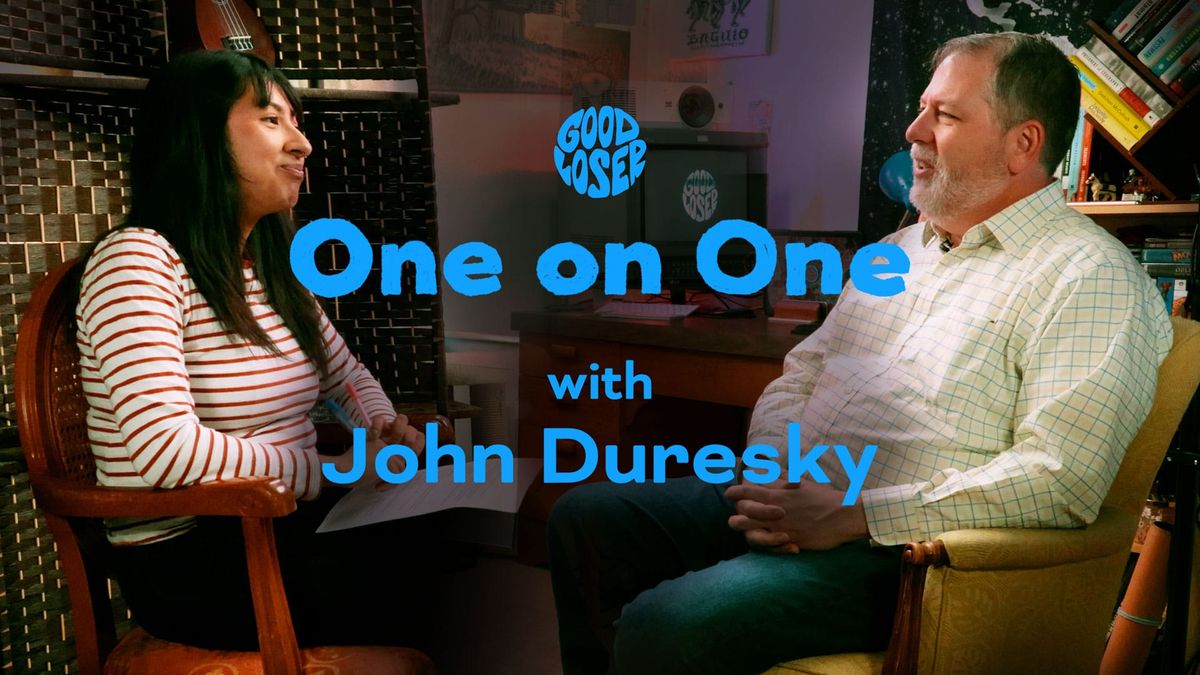
"We chose people to have medical bankruptcy... I think it's time to make a different choice."
For over an hour we sat with John Duresky, the sole Democrat running for Washington state's historically Republican District 4. We discussed Duresky's values, his many disagreements with the Democratic establishment, and ultimately why he's choosing to run. Along the way, we went into detail on his policies and agenda, and how he plans to directly improve lives for his constituents.
This is the featured version of our interview with John Duresky, enhanced for brevity. It's still a pretty long interview, coming in at just over 50 minutes.
The extended version of this interview contains an additional 20 minutes of discussion that we felt comfortable cutting for time. Donors on the editor tier can view that version here.
To learn more about John Duresky, visit johnduresky4congress.com
Good Loser is a proudly independent media project with no corporate ownership. With support from our community, we're able to continue spotlighting the stories corporate media never can.
You can support our work today for access to exclusive, donor-only content.
Prefer to support our work with a one-time tip?
Transcript:
Introduction: John Duresky is a retired Air Force veteran, a dad, and a Tri-Cities resident. He's running for Congress to represent Washington State's fourth congressional district, attempting to turn a district that has voted Republican for 30 years. This upcoming primary election is a "jungle election," which means only two names will end up on the final ballot, regardless of party affiliation. Duresky is a critic of the Democratic establishment but is running as a Democrat with hopes of changing the party from within. He prides himself on being a grassroots candidate. He signed the "Take Back Congress" pledge, vowing to fight for reforms that will push corruption out of politics, and doesn't take AIPAC money. We sat down with him for a wide-ranging interview that covered his political beliefs, policies, and how he seeks to improve the district. Here is our full interview with congressional candidate John Duresky.
Zam: Thank you for being here today.
John Duresky: It is really wonderful to be here. Thank you.
Zam: Who are you and why are you running for Congress?
Duresky: Well, my name is John Duresky, and I'm running for Congress because people of the fourth district deserve a better voice, and they deserve somebody that represents their interests, not the billionaires' interests. If you kind of want the longer version of the bio or maybe the short version here in this case: 24-year Air Force veteran, and then I did 13 years in civil service.
The "fork in the road" email from Elon Musk came to my desk. We said no to the first one. But then there was another email with more structure. And I said, well, okay, we're going to take that early retirement. And the next day I was listening to a Bulwark podcast, listening to Sarah Longwell talk about this wave election that's coming. I believe, and I say this on the campaign trail all the time, the Democrats are going to win a lot of seats this fall, just because of how poorly the Republicans have performed. But I'm listening to the podcast and she says something that kind of changed my life. She said, this next election is going to be driven by the kind of people that see how crazy things are, and they have to get off the sidelines. And I kind of realize it struck me. I was like she was talking to me. And so I talked to the local Democrats, and next thing you know, I'm a congressional candidate.
Zam: Very quickly, it sounds like. I'm curious, why take early retirement and why then, why that second email?
Duresky: That's funny. Nobody's asked me that question. It was really hard serving in the government and watching President Trump and the Trump administration just tear the government apart. Working in that situation, working for a person who's the antithesis of my values was not something that I could do. And so when they gave me that opportunity, I just took it. I didn't take it with the intent to run for Congress. For sure. That was not part of the deal. I've got a fishing boat I wanted. I wanted to go fishing.
Zam: Instead of fishing, you’re running.
Duresky: Instead of fishing, I'm definitely running. That's right, that's right.
Zam: We met you during a protest this January. What called you out there to be among the people of the Tri-Cities that day?
Duresky: Well, we love the No Kings protest and Indivisible. We just love them. And I would be at those No Kings protests regardless of whether I was campaigning or not. But I remember leaving the first No Kings protest I went to, and I think I got choked up a little bit. Literally, the right to assembly is written into the First Amendment of the Constitution. So I'm always called out to go to any of those things. It's very easy to find people that are looking to vote for something different. It's very easy to find Democrats there. And one of the things I hear at those events all the time is, "Yeah, I've been a Republican for decades, but I'm out." I meet a lot of people there who are ideologically aligned and ready for something different in their politics, for sure.
Zam: The Democratic Party is taking a lot of criticism in every direction, especially from within. What does being a Democrat mean to you, and why did you decide to run under that label?
Duresky: It's funny. This has been such a big topic lately. And you could put a quarter in the machine and I would just go. I grew up a Democrat, but the Democrats have lost their way, and there's just no doubt about that. And I very much want to bring the Democrats back to their working-class roots, where they never, ever should have left. So what brought me to be a Democrat? I remember being visibly upset and hoping for something better when Ronald Reagan beat Jimmy Carter in 1980. I was 12, and that sort of was where my politics started. But, you know, I spent my whole life in very conservative areas and very conservative workplaces, and I spent a lot of time around conservatives. The messaging people talk a lot about values. And my values are: I think the government should be able to do things for people.
And the perfect example of this is our medical care system, our health care. The Republicans have fought health care reform every step of the way.
Zam: Why do you think that is?
Duresky: You know, nobody ever asked me that question either. I mean, that's a funny question because strictly speaking, X's and O's, it really opens it up an opportunity for the Democrats. But the Democrats have been so insistent on finding a way to bring... to build the tent bigger, to compromise, to get Republicans to side, that they have compromised their own values. And this is a perfect example. The Democrats passed the Affordable Care Act going on... going on... going on 20 years now, and the Republicans—that was a Republican idea. Market reforms for our health care system, the Republicans came up with that idea. And then as soon as we passed it, they absolutely disowned it. They refused to let us implement that in the way that it was designed so that it would have the impacts that we were hoping for. So it has not done the good it might have. All that's to say, the Democrats have been for universal health care for almost 80 years. And we should say so. And so that's where we are. I believe it is past time for reforms to the system that lead to universal health care.
And so why the Republicans aren't doing that? The short answer is, because that's socialism. A very simplistic and ridiculous view.
Zam: I mean, I see it on Facebook. I see it here locally. People turn and say this thing is looking like it's going to help people. It's easy to call it socialism. It's easy to lean into communism, which is very, very scary for many people. Many people hear that word and are turned off immediately.
Duresky: Yeah.
Zam: Political ideologies aside, this sounds like it will help somebody.
Duresky: Yes. The socialism thing is pretty entertaining to me because President Trump has taken ownership stake in Intel, a steel company, and a raft of others. What do we call government ownership of production? What's the word for that? Yeah, I think it's communism, actually. So actually, the biggest communist in our country right now are not the Tri-Cities communists or socialists, but actually the Trump administration. That and to me, that's a crazy thing to say. But it is true. And that's just stuff. I guess I'm on video saying it. So there you have it.
But I want to tell you just a little story about this. So I was at a candidate forum up in Okanogan County, and I was with Jared Sessler and Devin Poore, the independent candidate, and one of the guys in the audience got up and started talking about his health care for his child cost $1.2 million. And he was an entrepreneur and he was still paying bills from that health care. And I think his point was he had to drive all the way to Seattle to get that health care. And he was wearing a MAGA hat. And I'm like, the Republicans still to this day have a concept of a plan. They do not have a plan. And I can tell you, I have a whole team of people here in a district for a race in a longshot bid to win the fourth CD. And I have a medical team with people chomping at the bit to start working to fix the system. So if I have that, you know, the Democrats at large have that.
Zam: The district hasn't sent a Democrat to Congress in over 30 years. When you talk to Republican and independent voters, where do you find common ground and where are the disagreements?
Duresky: Very early in my campaign, I signed on to a pledge with a group called Take Back Congress. The pledge has five parts. The parts are term limits, a moratorium on lobbying by departing congressmen, a ban on insider trading or stock trading by congressmen, overturning Citizens United, and an enforceable code of ethics for the Supreme Court. And the point about the code is, it's a message to all of the voters. We see that the system is broken, we see that the incentives are broken, and we want to go to DC and start fixing the system. Instead of the dividers, we're looking to build a new coalition of people that genuinely want to fix the government. The big deal about this is 80 other people have signed this pledge with me. So when we win, we show up in DC kind of not with a mandate of one, but with a mandate of 80, and that's... I mean, 80 would be a pretty significant percentage of the entire Democratic caucus. So it gives us a lot of weight from day one, not going by myself. We want to pull the aperture back and we want to help everybody. We're not going to start dividing the district into groups. We're just going to... we want health care for everybody, not for our special group, but for everybody. We want jobs for everybody. We want to fix the tariffs which function as a tax on all of the middle class. And so that's the kind of things we want to fix.
Zam: You pride yourself on being a 100% grassroots candidate. As far as signing a pledge.
Duresky: So this is the Take Back Congress pledge. And I actually also sent a request for endorsement and signed Track AIPAC's pledge as well. What is happening in our government, and specifically the insider trading? I mean, there's a video out about Dan Newhouse doing all of these serial trades where you can literally look at what's happened in the news and see how the congressmen and the people inside the executive branch, inside the Trump administration are making sometimes tens of millions of dollars off of this stuff.
I did contract oversight as a government civilian. I am not allowed to do that as a government civilian. There's all of these rules and restrictions and my family cannot benefit from my knowledge of my job. I cannot benefit. And if I do, it is grounds for immediate termination.
Zam: As a government employee?
Duresky: As a government employee.
Zam: But when you help run the government, when you are in Congress, everything changes?
Duresky: Congressmen, and the Supreme Court, and the executive branch, they're violating the law, the clear black and white law every day. And the worst thing about it is, as the government civilians, they can't even... they are afraid now to do a whistleblower complaint or anything like that because they'll just get fired. The structure of our government has so broken down that we don't even have like normal protections and normal oversight of any of this. I mean, we'll shut the government down to stop congressmen from trading on what they are learning from doing their job. I mean, that is completely unsat, and we've got to fix it.
Zam: Let's talk about policies. Farmers have been hammered with tariffs. You want to remove harmful tariffs that hurt farmers and raise prices for consumers. What does that look like in practice? Who do you have to convince and how long does that realistically take?
Duresky: Quite literally day one, we get to Congress and we can vote to take tariff power away. The executive branch should never, ever have had the ability to do this. One thing that I will vote for policy-wise all the time is: if you find an emergency power somewhere in the Constitution that is given over to the president, I really think we need to fix those kinds of things. No more emergency open-ended powers that go to the presidency. There's a whole bunch of people in America, a whole bunch of people had built businesses. I read a couple stories when I started, there was a guy that was doing like independent board games, and sometimes they would make, you know, bespoke games for like one-off, people would request specific games, and they could import the parts for so cheap that they could do that. And those kind of businesses have gone out of business. They've just gone away. Trump waved his magic tariff wand and just destroyed jobs. And it was the kind of jobs that Republicans always talk about being so important. They were entrepreneurial jobs for small business owners. And so I think we got a lot of support to end the tariff regime on day one.
Zam: How long would something like that take?
Duresky: It could be done very quickly, if we have the political will and depending on the direction of the country.
Zam: You've talked about reforming the tax code to make it fairer. How do you make sure tax reform helps farmers instead of hurting them?
Duresky: The tax code should value labor as much as it values capital. Our tax code right now is tilted so strongly in favor of wealth. Last year when I filed my taxes, I paid interest income. I have a couple of CDs, and that just got added to my gross income, and I paid regular taxes on it. Billionaires and millionaires have a carried interest exemption, and they hide that income via their tax accounting from the rest of it. And it's really it's really just interest. It's just income. The truth is, is these small farmers have been squeezed out by the big ones to begin with. The tax code is very favorable to the larger landowners. I think it's time to fix that. The tax code should treat everybody the same.
Zam: So the tax code should also treat small farm owners the same? Yes.
Duresky: We have income tax, at least at the federal level. We need less categories of income, and we just need to tax income. Stop making categories and everything else and just tax people based on what they've gained from their business. That's it. I don't like regressive taxes of any kind. The gas tax here in Washington is very regressive. It's a Democratic state. I'm a federal person, so I want to be careful here. That's the states. The state wants to do that, they can do that. But it's regressive and it's just hurting. It's hurting people.
Zam: Tell me what a regressive tax is.
Duresky: A regressive tax impacts lower-income people much more than higher-income people. So the gas tax is a great example. We probably paid... let's just spitball, say I paid $1,000 in gas tax last year. Maybe let's just say that's 1% of my total salary. But if you're making $500,000, that's a quarter of a percent. Now $400,000. In other words, the percentage of your income, you can afford that tax a lot better. That tax hits people who are poor much harder.
Zam: What can you, as a single representative in a minority party, do about affordability when it comes to groceries and housing?
Duresky: The Democrats have done a bad job, and I've heard from a lot of people, they haven't... they haven't been strong and effective when we needed them to be. And so we're kind of in this situation now. The tariffs, and I don't mean to beat down on this, but there are all kinds of things the government does throughout the economy that you kind of hear about.
As I've been going, I've already talked about some of the jobs from entrepreneurs that got hammered by the tariffs. We know that our export markets for many of our agricultural products are being hurt by the tariffs. We know that the input costs and again, all of that leads to jobs going away and grocery prices going up. But the Trump administration has also done things like cut minority funding in the Small Business Administration. You see, it was DEI, according to them.
And so that really damages our job production in these areas. It just... we have a system that was helping people and giving people a hand up. And we haven't done a good job of defining that to the taxpayers and then making it count. But lowering grocery prices is a long slog, right? We've got to do what we can.
But getting everybody good jobs is probably the first step and how you do that is you get the government out of the way and you make sure that we have a stable business environment and where you can, you help encourage investment in all sectors of the economy.
Zam: When it comes to affordability, you would say raising the average income of people would be the best place to start.
Duresky: Yeah. Yeah, absolutely. If you're working full time, that job should be... you should be able to live off of it. And there's other things we need to do, by the way, about housing. The one thing I would like and I don't even know how effective these programs are, but in the at least in the past, we used to have low-income loans or even, you know, like programs to help first-time homebuyers get into homes. The government used to do stuff like that. The Republican instinct here is to have a program, but then make sure that there's profit motivation within that program.
Since 1980 and with Ronald Reagan, the Republicans have been telling a lie. And that lie is the government is bad and can't do anything. I grew up in a different time. I was born in 1968 and John Kennedy had said, we're going to put man on the moon. And we did it, eight years later. This country invented and then deployed the internet around the world. And by the way, the government helped kick that off. So the government absolutely can do things.
The Republicans like to lard these things down with regulations and requirements and then nobody... and then everybody hates the programs and they all complain about the programs, and then the government doesn't work right. And the Republicans come back and say, see, look, this government's all terrible. And I think I think we can fix that. I think it's time to start sending people to Congress that want to make government work for the people. That's why I'm a Democrat. That's why I'm here.
Zam: People go as far as to say we should abolish the government. That we shouldn't have anybody there. It's difficult because I want to believe that it's possible to have a government that cares about you, and cares about your access to health care, housing, groceries. I want to believe that that is possible, but a lot of people don't, and a lot of people don't, because they look at what's happening in this country and they see that Trump is doing the things that he is currently doing, and they become distrustful and angry, and upset and I feel this myself.
Can the government turn around? Can the United States government turn around and make real change for its people?
Duresky: I mean, it's a hard question, and I do not want to be glib with the answer. But the stakes are too high. And I'll give you an example. Social Security is one of the greatest retirement programs ever. And there are lots of Americans that are on disability Social Security, I might add. And the program has low administrative costs. It's incredibly effective. Something like 40% of the people on Social Security depend on Social. It's their sole source of income. So what does that tell you? Well, it tells you that we do not have a choice but to fix this government.
We need these things to work. Health care. A large percentage of citizens in those rural areas are on Medicaid or Medicare. I mean, and when I say large percentage, I mean like past 70%. So if we don't fix the reimbursement rates for Medicaid and Medicare, the rural hospitals don't stay open. And if the rural hospitals don't stay open, then there's no community there. There's no way for people to continue living there.
Zam: You're getting ahead of my questions.
Duresky: Sorry. So there's no choice. But it's worse than that, because that question is a result of a long-term Republican strategy. That was the plan. The plan was to make you believe government can't do it. It's been the plan since the 80s, and it's past time for somebody to say, no, we can. You dipshits just don't want to. Oh, I made a swear word.
Zam: That plan, the government can't help you. Would you say that's been successful?
Duresky: Yes! Well, look, let's call a spade a spade. The Republicans offering nothing to working-class people, offering no solutions on health care, have a trifecta of government control. They control the Supreme Court. They control the Senate, they control the House, and they control the presidency. And it's because as I as I started with, the Democrats have lost their way and they haven't stated clearly what we want to do. And people pick up on that and look.
And I'll be blunt, I have self-interest in this. I need the government to work because I'm a government pensioner. I'm a military retiree, I get a government pension. And so I need the government to work. I need the VA to work for me. I need veterans to receive the care they need because I am one.
Zam: The Trump administration has just proposed $400 million cuts to Hanford. I just found out right before we sat down.
Duresky: Are you kidding me?
Zam: Yeah. The Tri-City Herald put out an article just today, a $400 million cut to the Hanford nuclear site. What steps would you take in your first year to stabilize Hanford's workforce against the federal budget cuts without simply asking for more money?
Duresky: Here's what we did to make government more efficient. We contracted out the work. So we have all these contractors that do the work out at Hanford. I am not suggesting to those contractors today that we are going to reform that system tomorrow. But I'm just going to ask this question. Has that been the right thing? Because from my perch inside the government, I saw how much money we spent on oversight, how much money we spent to incentivize work scope. And so again, this goes back to that bad government thing again.
The Republicans imposed bad government on us and frankly, it drove the costs way up. We do need some oversight at Hanford. I am going to stay away from kind of specific policy declarations and say, it costs a lot of money to do what they're doing out there. It can be dangerous work. It is unimaginably complicated work. And there are times when they have to, like, literally dig trenches by hand out there because of the nature of what they're doing. They don't want to disturb whatever's below it. They can't use a machine to do the work. So, the best thing that we need to do is, is ask them what they need and then get out of the way.
And so, that is not clearly what the Trump administration is doing. And I'd be curious to hear more about that. And I'll be I will definitely look to be building relationships with labor and with the Hanford itself and, and kind of figuring out what, what the way ahead is because you asked besides just restoring the money. So there's a lot of work to be done there.
Zam: I'm just gonna state very briefly, you've been at Hanford, you were at Hanford for five years? So you have experience with what that looks like. You're familiar with the work that employs so many people here in the region.
Duresky: Yeah.
Zam: You are in favor of raising the federal minimum wage.
Duresky: Yes.
Zam: Central Washington has a mixture of agriculture, federal employment and small business. How would a small business here in comparison to a large corporation like on the west side of the state, how would you make it so that everyone here can make a living without running small businesses out of town?
Duresky: Yeah, this comes up that the academic research on the impact of raising minimum wage is muddled. It seems like to me that everybody is looking to get the answer that they want. You know, they're almost starting with the answer that they want and determining that outcome through their research. All that's a long way of saying, you have to pay people a living wage. I don't know what that wage is. But if the market is somehow paying people less than a living wage than the market has failed. And if the market is failing, the last resort for a market failure is the government and the minimum wage.
So, so ideally I would never... I would, I would set the minimum wage to not cause that kind of problem that you're talking about and then let the market... but the market isn't working. And so that I mean, I've talked to a lot of people, libertarians, in the federal government, very common. They're like, don't mess with the government, the free market, the market does it. The market takes care of it, but it doesn't.
Zam: 14 rural hospitals in Washington are at risk of closure due to proposed federal Medicaid cuts and financial strain, with many of them in central Washington. What specific policies will you enact to ensure our communities have the high quality health care they deserve?
Duresky: The Big Beautiful Bill did a whole bunch of things. And one of them is it put some work requirements on some Medicaid people. And we know that work requirements cost more to implement than they gain. As a matter of fact, Georgia did something like this and it cost Georgia $8 to implement the program for every dollar in benefits that it paid. So we don't need that kind of government. We also know that they changed the reimbursement rates for Medicaid and Medicare. They are unacceptably low. And that is particularly damaging to the rural hospitals that you're speaking of. It's literally, but again, and I'll just be blunt about this, if you want health care, you got to pay for health care. And so a small change in the Medicaid and Medicare health tax that everybody pays on their payroll, would probably help as well.
Yeah, I guess a tax increase in that area would be necessary, maybe necessary. Again, we need immediate fixes because we need to keep the hospitals open. So there's just no option about that. The other thing is the subsidies for the Affordable Care Act premiums. And this is what caused the independent entrepreneurs to see their premiums double and triple. And I have friends, and I've heard the stories we're talking about people that have paid 5 to 10,000 more dollars a year for their health care premiums, and most normal people can't afford that in their budget.
Zam: You support moving towards universal health care.
Duresky: 100%. Health care helps everybody. There's nobody in the district that is outside of getting good health care in the hospitals and everyplace else. Problem is, there's kind of an oxymoron buried in all of this. The government is performing so badly right now under Trump that we would have to find some way to protect the system from a future president like that. It's weird to turn this back into an anti-Trump screed, but the fact is, is you wouldn't want your universal health care to go through a President Trump when he can just fire people and make changes to policy and do what he's doing. It's the richest country in the world and we have been for decades. We chose this. We chose people to have medical bankruptcy. We chose people to have to choose between buying their medicine or buying groceries. And I think it's time to make a different choice. And I'll defend that anywhere, anytime.
Zam: Why do you think people would vote against this, if it did raise taxes, I know people are... Why would they vote against universal health? Why would they vote against universal health care when it would benefit them?
Duresky: I'm not going to lecture people on voting against their own self-interest. I'm going to repeat what I've already said. They've been lied to. I was listening to a podcast a while back called Focus Group. And the person was interviewing somebody and they were on disability benefits, and they were on SNAP benefits. They were so happy to vote for Trump because of his stand against trans people. And look, I'm going to take a risk here in even bringing that up. There is danger here because of how effectively the Trump administration has used that issue to hurt people that his constituency doesn't like. And I, I can't believe that's where our government is.
But if I'm not clear in the statement, let me just say I stand with everyone's freedoms to live their most authentic self. I stand with your freedom of speech, I stand with your freedom of religion, and I stand with trans people who want to live as trans people. And I, I do not understand how the Republicans have so used that issue, an issue of 1%... less than 1% of Americans to absolutely destroy the faith in government, destroy our government services, destroy the administrative capacity of the government. And it is, it is shocking to me that we have to continue having this conversation when it is obvious that we need more help in this health care area. We spend the most money in the developed nations, and we get some of the worst health care outcomes. Time to do something different.
Zam: You spent 37 years in public service and the Air Force and civil service. As somebody who has used the VA, what are your frustrations with the system and how would you help fix them so that veterans can get the care and benefits they deserve?
Duresky: A lot of people love the VA health care system. Actually, a lot of people that are in it, are generally pretty satisfied. The compensation part that deals with claims and and the other part, that part's terrible. And I would love to see that part reformed in a very specific way to make the whole process more transparent and easier to file. It's very, it's very complicated and convoluted the way it works now.
Zam: Do you think that's on purpose?
Duresky: Very much. It's very much on purpose, intentional. And if a veteran comes to the VA and says, hey, the law says that I have this disability, and that I should be compensated for it, that really should be the end of the conversation. And the Veterans Affairs should not be looking for a way to deny them that payment.
Zam: What do you get when you deny a veteran?
Duresky: Well, you don't have to pay them. The short version of all this is, and I'll just give you the classic example, I have hearing loss from working around jet engines. I have a service-connected disability of 0%, which means the VA does not pay me for my hearing loss. I have documented hearing loss, but I don't... the VA does not pay for that. And so they're very, they're very cheap and they're very, they're very diligent about saving, you know, little dollars here and there. And it's, it's a ridiculous system. People serve their country and leave injured. That should be the end of that conversation.
But I do want to emphasize the Veterans Affairs does a lot of things with loans, with education, there's a lot of things that work. But like all parts of the government, the Trump administration has hollowed out the administrative capability of these organizations by these DOGE cuts. A lot of experienced people, a lot of experienced talent has walked out the door. Very bad.
Zam: You have been direct about what happened under DOGE should never happen again. But a lot of voters believe there is genuine waste in the federal government. Where is the line between protecting workers and eliminating inefficiency?
Duresky: You know, there's a great cliche about this that, you know, 50% of government spending is inefficient and wasteful. The problem is, is nobody knows which 50%. But all of this is based on, again, it's based on a lie.
The actual portion of the government pie that goes to these kinds of things is tiny. The big portion of the spending goes to the Department of Defense, Social Security, Medicaid, Medicare, and paying the debt. That's where that's where the money in the federal budget goes. And this focus on fraud and inefficiency and waste is in this little sliver. And, you know, I'll just point out, like a very specific example here, the USAID thing that DOGE literally destroyed. That bought us so much goodwill around the world, it basically put the U.S at the forefront of when there was an emergency in the world.
When people were suffering, you could see that the United States was there with an American flag on aid and food going to the people most in need. You make an ally for life. When you do that. You make America the country that people think of is the greatest country in the world. And we did that for pennies of tax dollar payments for each taxpayer. We did that for very low cost. Government is expensive. You know, it just is. And as soon as you go to cut any part of it, there's a giant constituency that steps up and says, Oh, no, no, no, not that part. I didn't mean that part. I meant some other government waste that's someone else. Fine.
But you see that every time, every time the blade comes out to start cutting things away, there's a radical constituency that is like, no, we can't do that. You want to really cut government? We can start with, reducing the number of generals in the military. That's where I'd start.
Zam: The military.
Duresky: Yeah, I said that. Yeah, I got 24 years. Every general has to build his own empire, so every general has to have a staff, and he has to have a mission, and he has to be able to claim that he has so many dollars under his command and so many assets. And so every time you make a new general, you make a whole new constituency of, of taxpayer spending, and then you have a whole bunch of spending that goes into the military, that's dedicated to giant programs that have not kept pace with where the military is.
I would absolutely love to be on the Armed Services Committee someday and would love to make a mess. These people are all so much smarter than you're expecting, though. And they you already know they're smart when you go in and you meet them, and then you meet them and you're like, oh my God, I need more, because they're going to tell you until the cows come home that they got to have this program and that program. But when you're talking about generals. Generals and the military and the big budget, big dollar, you want to find a place to start cutting spending in America. You want to start on a place that we could reduce the budget? That's where I'd start. Yeah. I said that.
Zam: People don't like to hear that. People don't like hearing about cutting money from the military.
Duresky: Fair. And I'm not saying that we don't need a strong military. We absolutely do need a strong military. What we need is real combat power, not staff and generals. The American way of fighting is very expensive. But when you look around the world, America is still the only country that has a supercarrier at all, like our class of aircraft carriers, an aircraft carrier and a strategic bomber and a ballistic submarine do not defend America. They project force into the world. I think it's time to start asking our leaders, What are you doing with that stuff? Is that really protecting us?
Zam: When you ask these questions, when you question the military of the most powerful country on the planet, do you expect there to be a welcome mat on the other side of that?
Duresky: I spent 24 years in the Air Force. I support a strong military, but supporting a strong military and saying, you want to find a place in our budget where there might be a little extra, you know? You know, and let me be very specific. The Trump administration — I hate to keep coming back to that. They started something called Space Force.
And I don't know how to put this, and I'm sorry to all of the people in Space Force right now for saying this, when I say we need less generals, that's what I mean. We don't need a whole separate service for space. We don't need a whole separate service. I don't know if cyber got broke off yet or not. They were talking about making a whole cyber service as well. Every time you make a whole new service...
Zam: Is that internet?
Duresky: Yeah. I'm a former cyber security officer in the Air Force. That was my actual job. That's what I mean when I talk about making generals. We need soldiers. We need combat power. If you told me you wanted to cut a bunch of generals and make the 81st Airborne bigger, I would be like, yep, that's a good idea. We should do that. If you wanted to tell me that we were going to put, you know, 10,000 drone pilots out tomorrow and get them trained on how to deploy small drone forces, I would be all about that. I would say that's money we need to spend tomorrow.
When I say the military needs to be reformed, it needs to end its long-time love affair with gigantic expensive weapons programs that are out of date to where the wars are going today.
Zam: We went out to some No Kings day protests. And something I heard often was fear for neighbors. Fear for not only the Hispanic population but every immigrant community. How would you work to protect families and those people that are most vulnerable in our communities?
Duresky: Yeah. Look, I mean, the Democrats are actually doing a pretty good job right now of standing and fighting against ICE in Congress right now. The fact that people who swear an oath to the Constitution to serve our country would be doing what they're doing in ICE — I don't understand. And on day one, we're going to look to hold people accountable.
Zam: What does accountability look like right now? Who are you holding accountable?
Duresky: The leadership of the Department of Homeland Security. Let's start there. Kristi Noem has already been sent packing. Not a day too soon. Everyone in the leadership chain is... I was not listening to one of my normal podcasts. Like a news story about a guy that was doing legal work for training ICE agents on the legal standards. And they basically made it so that it was one day of training.
The Trump administration has broken ICE front to back. Congress needs to pass a law very much clarifying what their role in our society is and restricting their role. Immigrants are a crucial part of our community and our economy. Anybody that says anything else, they're not upholding American values. They're not standing up for what has traditionally made this the shining city on the hill, the beacon to the rest of the world.
I'm a fifth-generation immigrant myself. My family came over from Poland in the 1800s. Almost everybody here is an immigrant of some kind, and I just don't get it. The Statue of Liberty has a poem on it. I actually did a video myself about this a while back because we happened to be on Staten Island taking the ferry right by the Statue of Liberty. That's the country I grew up in is, you know, that country that says, you know, give us your poor and your huddled masses.
So people have been working here for five years, decade, and contributing to our community. They deserve a legal path. They deserve legal status in this country. And it's far past time to stop exploiting people because of their legal status, and then find a way to get them either citizenship or a green card or whatever, whatever the legal status that they want. We need to do something to fix that system and to not do so is un-American.
Zam: Let's chat about your opponents. Matt Boehnke, Amanda McKinney, Jared Sessler. They all have some recognition and credibility. What is the strongest case against voting for you? And how do you answer that?
Duresky: What is the strongest case against voting for me, did I hear that question right?
Zam: Yes.
Duresky: Can I comment the way people come in on my social media?
Zam: Sure.
Duresky: I get called a "libtard" every day on social media. I would not normally use that word. But that that is what I get called every day. The strongest case against me, the single point case against me as a candidate, is that I went out and put a D behind my name. I have a D in front of my name, Duresky, and apparently now there's a D after my name. That's the whole case.
Zam: Just that label that you're running under?
Duresky: That's it. That's all they got.
Zam: They don't point out any specific policy?
Duresky: Well, you know, we're not that far along yet. The fun thing about the election right now is that we've got two MAGA candidates, and then we've got Matt Boahnke, who wants to be a moderate, and we get to let them fight it out. And frankly, I don't really have too much to say about them. Let them, let them fight.
Zam: Let them fight.
Duresky: Yeah. Amanda McKinney and Jared Sessler are both competing over who has the best Trump endorsement. And so that that's a fight they can have.
Zam: Great point. And that's something that I've been trying to understand. Do you think having a Trump endorsement, do you think that could be something that would repel voters?
Duresky: I think I get a vote every time one of those people puts out their Trump endorsed sign. I don't know how much more incompetence I have to point out from the Trump administration, but this Iran war is Exhibit A. The tariffs are Exhibit B, I mean, the immigration is Exhibit C. The list goes on.
Zam: It just goes all the way down.
Duresky: Steve Bannon once said that his political strategy was to flood the zone with shit. They're still doing it.
Zam: So, you're elected and serve a full term. What changes have been made? What does Yakima look like? What does the Tri-Cities look like? What is different because you, John Duresky, were in Congress?
Duresky: I think we can get the ban on insider trading by Congressman. I think we can do that fast. I think we can start to start an immediate break on the worst excesses of the Trump administration, so we can start getting tariffs going back. We can maybe start kind of around the edges fixing some of the health care stuff. So right away in I think within two years, we can hopefully get some of those reforms that Congress needs really bad. And also I think the ban on lobbying is not a hard reach. For some reason Congressmen are really averse to term limits.
I'm 57, I've got a fishing boat, and I really do not want to still be in DC running, flying back and forth, to DC, to Tri-Cities, for 20 more years. So If I become the greatest congressman in Central Washington history, you still won't have me to kick around for 20 years because nobody got time for that. That's crazy.
Zam: What does accountability look like to you and how do you hold yourself to that vision?
Duresky: There's a couple of things. One, I've lived under my oath to the Constitution, as I've talked about already. For 37 years. And this is just a continuation of that service. The other thing that I would tell you is that, this is hard, campaigning, putting together the staff, doing the events, having all of the processes of running. It's a job.
Every day I feel an immense debt and an obligation to the people of Central Washington to be the best congressman I can be and to be the best leader I can be, and to live up to their, their hopes. It's what drives me out of bed every morning. I've stated pretty clearly where I am, like on the pledge. That is the goal and that will be the goal when we get there and we'll work toward it.
Zam: Is there anything else you would like to share?
Duresky: This has been coming up a lot lately. And I just want to say it clearly on camera. I don't like the two-party system of government that we have. And I'm actually going to do some research and I might make a video myself about why we keep saying that. Why, why does government power, why does political power flow through the two-party system?
I fully recognize that the Democrats have, have really not had the right message, and they have really failed. But even more than not, the message, they've just failed. They failed to get it done for the American people. And they have made at, especially at the elite levels. They've made really, really bad decisions. I served in the government for that entire time, so those weren't my decisions. But I do get to, I do get to disclaim those a little bit. I believe the Democratic Party can be reformed and it's time to do that reform now. But I understand the disillusionment with the party, and I really hope to bring a different vision to the party, so that we have a consistent message that voters hear and they know that we're working toward it.
We've lost the trust of the voters. It's not enough to just be anti-Trump or anti-Republican. We have to stand for something. And I hope in the course of what I've said here that I've made it clear that I do stand for something, and also that I'm willing to say the hard things. And, you know, if that shows up on an Amanda McKinney attack ad later, that's the price of doing business. You have to stand for something. My campaign adviser told me, never take a position on anything. And I've gone out and talked to everybody and taken all kinds of positions on everything. So, apparently I didn't listen to that very well.
But what I'm getting from the people is they want something different. And that's the gamble. That's the bet. So the final point of all of that is I would look to reform the two-party system itself. I would literally look to, to change the Constitution so that more voices have more of an opportunity in Congress so that you don't just get to dismiss whole groups of people and say, well, you have to be with the Democrats, or you have to be with the Republicans, and that's your only choice, because that hasn't... it served us well for many, many years. It's not serving us well right now.
Zam: You just made me remember something. Washington is a two-name-only-on-the-ballot state.
Duresky: Yes. Okay. Yes.
Zam: Speak to the importance of that.
Duresky: You know, I was going somewhere at the end of that, and then I lost my place. I'm just going to admit that freely. So the whole thing about all of that is the primaries. August 4th. It's a jungle primary. It's a top-two primary. So you already, we've talked about the field. It's large. There's going to be 7 or 8 candidates on it. One of those candidates will have been endorsed by the county party organizations throughout the district. And that candidate will be me. We have a plan.
I believe we are getting through the general, and then we have to test, the real test here is, can we bring enough independents? Can we activate enough people upset about what they see on the news to win the race? But right now, make sure you register to vote. Make sure you vote in the primary.
And then the other thing you have to do is please visit the website. Please visit my social media. I'm on all the social media, follow, subscribe. Every little bit helps.
Zam: Only two will make it.
Duresky: Two get through the jungle primary. That's right. Everybody understands that, right?
Zam: I did not understand that. Upon doing research for this interview is when I realized Washington was a two...
Duresky: So it's called a jungle primary. Jungle primary. Take Texas — the big thing between Talarico and Jasmine Crockett.
Zam: Right.
Duresky: That was a Democratic Party primary. Those two Democrats, again, you know, against each other. And then there was a Republican primary. And then in the general, those will meet, but not in Washington. That's why last time there wasn't a Democrat on the general election. There was no way for a Democrat to win. We're looking to change that this time for sure. The top two vote-getters go to the general. That's the story. So August 4th, a lot to do between now and then for me.